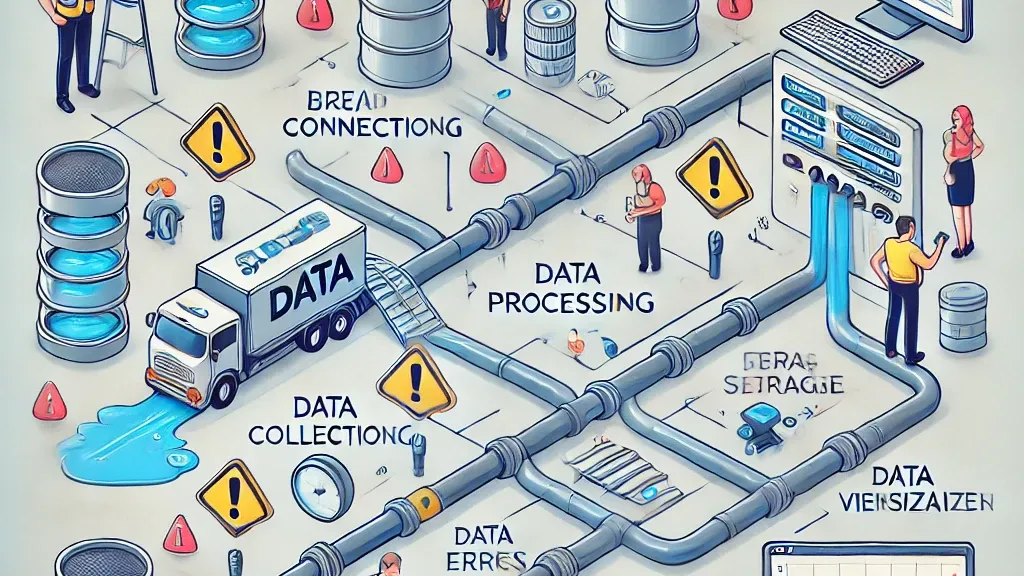

Business growth creates new opportunities, but it also introduces new technical challenges. As organizations expand, their data needs become more complex. More customers generate more events, more teams rely on analytics, and decision-making increasingly depends on fast, reliable access to information.
Many companies discover that the analytics systems that worked well at an early stage struggle to support growth. Data pipelines become slower, infrastructure becomes harder to maintain, and teams spend more time rebuilding systems instead of creating new capabilities.
The solution is not designing the most advanced architecture from the beginning. It is building analytics infrastructure that can evolve alongside the business.
A flexible data platform should support changing workloads, increasing data volumes, and new analytical requirements without requiring frequent migrations or complete redesigns.
Why Analytics Infrastructure Must Evolve
Business requirements rarely remain static.
A startup may begin with simple reporting needs, such as tracking customers, sales, and basic performance metrics. As the company grows, new requirements appear:
- More data sources
- More complex reporting
- Real-time analytics
- Machine learning applications
- Self-service analytics for teams
- Increased compliance requirements
Infrastructure that cannot adapt quickly becomes a limitation.
Instead of supporting growth, outdated systems create friction. Teams spend valuable time working around technical constraints rather than using data to drive better decisions.
Modern analytics infrastructure should be designed with change in mind.
The Challenges of Growing Analytics Systems

Scaling analytics involves more than handling larger amounts of data. Growth affects every part of the data ecosystem.
Increasing Data Volume
As businesses expand, they collect more:
- Customer interactions
- Transactions
- Application events
- Operational records
- Marketing data
- External information
Systems must handle this growth efficiently without constantly increasing complexity.
Changing Business Questions
The questions businesses ask from data evolve over time.
Early questions may focus on:
- How many users do we have?
- What are our sales numbers?
- Which products perform best?
Later, teams may need answers about:
- Customer behavior patterns
- Forecasting
- Operational efficiency
- Personalization
- Long-term trends
Analytics infrastructure should support new questions without requiring major reconstruction.
More Data Consumers
As organizations grow, more teams depend on analytics.
Marketing, finance, operations, product, and leadership teams all require access to trusted information.
Infrastructure must support broader usage while maintaining consistency and governance.
Design Principles for Growth-Ready Analytics Infrastructure
Creating adaptable analytics systems requires thoughtful design choices.
The following principles help organizations build platforms that can grow without constant redesign.
1. Separate Data Storage and Processing
One of the most important architectural principles is separating where data is stored from how it is processed.
This approach provides flexibility because teams can:
- Increase processing capacity when needed
- Optimize storage independently
- Support different workloads
- Avoid rebuilding systems as requirements change
A flexible architecture allows organizations to adapt resources based on actual needs.
2. Build Modular Data Pipelines
Monolithic pipelines often become difficult to change as organizations grow.
A modular approach divides systems into smaller, manageable components.
Benefits include:
- Easier maintenance
- Faster troubleshooting
- Safer updates
- Reusable processes
- Independent improvements
For example, separating data ingestion, transformation, and analytics layers allows teams to improve one area without disrupting the entire system.
3. Avoid Overengineering Early
A common mistake is building infrastructure for hypothetical future problems.
Organizations sometimes create highly complex systems before they have the scale or requirements that justify them.
Overengineering creates:
- Higher costs
- More maintenance work
- Longer development cycles
- Additional operational challenges
A better approach is creating a strong foundation that can expand when needed.
Good infrastructure supports growth without requiring unnecessary complexity from day one.
4. Create Reliable Data Models
As organizations grow, inconsistent data definitions become a major challenge.
Different teams may use different interpretations of important metrics, creating confusion and reducing trust.
Reliable data models help by providing:
- Consistent business definitions
- Shared metrics
- Clear relationships between datasets
- Easier reporting
A strong data model creates a foundation that supports future analytics needs.
5. Automate Scaling and Operations
Manual processes become increasingly difficult as systems grow.
Automation helps teams manage larger workloads while reducing operational effort.
Important areas for automation include:
- Data pipeline execution
- Quality checks
- Infrastructure adjustments
- Monitoring
- Error notifications
- Deployment processes
Automation allows teams to spend less time maintaining systems and more time improving them.
Supporting Changing Workloads Without Major Redesigns

Growth often creates unpredictable demands. A successful analytics platform should handle changing requirements without requiring large-scale migrations.
Several strategies help achieve this.
Design for Different Types of Analytics
Not every workload has the same requirements.
A growth-ready system should support:
Operational Analytics
Used for immediate decisions and frequently updated information.
Business Intelligence
Used for reporting, dashboards, and strategic planning.
Advanced Analytics
Used for forecasting, experimentation, and machine learning.
Supporting different workloads requires flexible architecture rather than one solution optimized for only one purpose.
Use Reusable Components
Reusable infrastructure reduces duplication and speeds up development.
Examples include:
- Standard pipeline templates
- Shared data models
- Common monitoring systems
- Reusable transformation logic
When teams build on proven components, scaling becomes faster and more consistent.
Maintain Clear Interfaces
Systems become easier to evolve when different components communicate through clear boundaries.
Well-defined interfaces make it possible to:
- Replace individual components
- Add new capabilities
- Improve performance
- Reduce dependencies
Good architecture allows change without disruption.
Avoiding Frequent Migrations
Large migrations are expensive, risky, and disruptive.
While some migrations are unavoidable, strong design reduces how often they are needed.
Organizations can avoid unnecessary migrations by:
- Choosing flexible technologies
- Separating responsibilities between systems
- Maintaining clean data structures
- Avoiding excessive customization
- Reviewing architecture regularly
The goal is not creating a permanent system that never changes. The goal is creating a system that can change gradually.
Building a Culture Around Scalable Analytics
Technology alone does not create adaptable analytics.
Teams also need processes that support continuous improvement.
Important practices include:
Document Decisions
Architecture decisions should be recorded so teams understand why systems work the way they do.
Review Regularly
Infrastructure should be evaluated as business needs change.
Encourage Collaboration
Data engineers, analysts, and business teams should work together to ensure systems solve real problems.
Focus on Long-Term Value
Short-term solutions may create long-term complexity. Sustainable decisions consider future growth.
A Practical Roadmap for Building Flexible Analytics Infrastructure
Organizations can improve their analytics foundation by following these steps:
- Understand current and future business needs.
- Identify limitations in existing systems.
- Create modular and flexible architecture.
- Standardize important data processes.
- Automate repetitive operations.
- Improve monitoring and documentation.
- Continuously refine based on changing requirements.
This approach allows organizations to grow without constantly rebuilding their analytics environment.
The Future Belongs to Adaptable Data Platforms
Analytics infrastructure should not be viewed as a one-time project. It is an evolving foundation that supports business growth.
The most successful organizations build systems that can adapt as their goals, customers, and markets change. They avoid unnecessary complexity while creating enough flexibility to handle future challenges.
By focusing on modular design, reliable data models, automation, and scalable processes, companies can build analytics platforms that grow with them.
The best infrastructure is not the one designed for today’s needs alone. It is the one that continues delivering value as tomorrow’s needs emerge.